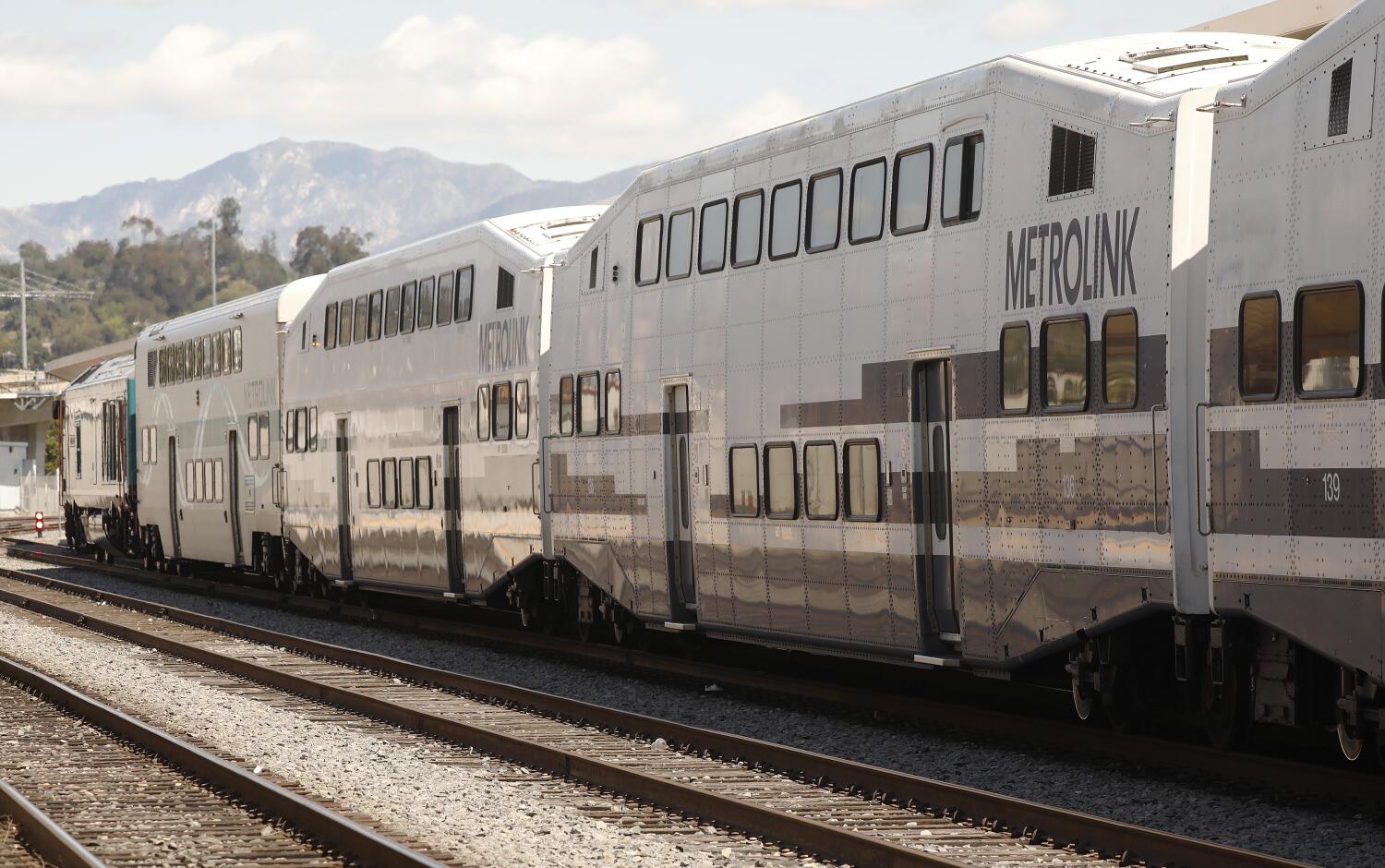
Passenger rail disruptions are rarely the result of a isolated mechanical failure. Instead, they represent the activation of a vulnerability cascade where physical defects, environmental variables, and rigid scheduling protocols intersect. When a Metrolink commuter train stranded hundreds of passengers in Anaheim Hills, the incident exposed the structural fragility inherent in regional transit networks that operate under tight spatial and temporal constraints. Mitigating these systemic failures requires understanding the precise operational bottlenecks, thermodynamics of passenger stranding, and logistical dependencies that turn a routine locomotive malfunction into a multi-hour crisis.
The Tri-Particle Vulnerability Framework
To dissect the Anaheim Hills breakdown, the event must be categorized through three distinct operational vectors: the primary mechanical insult, the right-of-way constraint, and the recovery asset deployment lag.
1. The Primary Mechanical Insult
Locomotives are complex thermodynamic and electromechanical systems. In commuter rail configurations—typically diesel-electric—power generation relies on a prime mover driving a main alternator, which supplies current to traction motors. A critical failure in any sub-system (such as a loss of head-end power, pneumatic brake line pressure drop, or traction motor thermal runaway) immediately triggers an automated safety shutdown. Because these vehicles pull multi-car passenger consists, the loss of propulsion renders the entire assembly inert.
2. The Right-of-Way Constraint
The geography of the Anaheim Hills corridor introduces severe spatial limitations. Unlike multi-track mainlines where traffic can be diverted around a disabled train via interlocking crossovers, single-track or restricted-clearance territories create an absolute bottleneck.
- Physical Confinement: Steep topography or narrow rights-of-way prevent easy deployment of off-train emergency services.
- Network Blockage: A single disabled train occupying a block segment halts all following and opposing traffic within that signaling sector, paralyzing the corridor.
- Access Limitations: Lateral access for rubber-tired rescue vehicles (buses, ambulances) is frequently non-existent along specialized rail cuts, forcing reliance on rail-born recovery options.
3. Recovery Asset Deployment Lag
The time elapsed between the initial distress signal and the resolution of the incident is governed by a strict logistical function:
$$T_{total} = T_{diagnosis} + T_{dispatch} + T_{transit} + T_{coupling} + T_{clearance}$$
In regional networks, rescue locomotives or qualified mechanical personnel are rarely stationed at every node. They are centralized at primary maintenance yards. The transit time ($T_{transit}$) of a relief locomotive is heavily dependent on track availability, speed restrictions, and the necessity of navigating around the very congestion caused by the initial failure.
The Thermodynamics of Passenger Stranding
The immediate consequence of a locomotive failure is the loss of Head-End Power (HEP). HEP is the system responsible for providing electrical power to the passenger cars for lighting, communication, and, most critically, Environmental Control Systems (HVAC).
When HEP terminates, the passenger cabin transitions from a controlled climate to an insulated thermodynamic trap. The rate of internal temperature increase within a stranded rail car can be modeled based on ambient external temperature, solar radiation load, and the metabolic heat generation of the passengers.
[Ambient Solar Radiation] + [Passenger Metabolic Heat]
                       │
                       ▼
         [Insulated Passenger Cabin]
                       │ (No HEP / HVAC)
                       ▼
      [Rapid Thermal Heat Accumulation]
Each human passenger generates approximately 100 Watts of sensible and latent heat at rest. In a fully loaded commuter car carrying up to 150 passengers, the internal heat generation matches a 15-kilowatt space heater running continuously. Within confined aluminum and fiberglass shells exposed to direct sunlight, internal temperatures can breach safe thresholds within 30 minutes.
The operational dilemma for transit agencies during this phase is severe. Evacuating passengers onto an active right-of-way introduces extreme liability and physical danger, particularly in rugged or elevated terrain like Anaheim Hills. Conversely, maintaining passengers inside a deteriorating thermal environment risks widespread heat exhaustion.
Logistical Constraints in Mutual Aid and Bus Bridges
When a rail asset is compromised indefinitely, the standard operating procedure dictates the establishment of a "bus bridge"—mobilizing regional transit buses to ferry stranded passengers to the nearest functional station. This strategy looks seamless on paper but encounters severe execution barriers in practice.
The Elasticity of Demand vs. Fixed Fleet Capacity
Commuter trains maximize spatial efficiency, moving 500 to 1,000 individuals simultaneously. Replacing a single multi-car train consist requires 10 to 20 standard transit buses. Regional bus fleets operate near peak utilization during commuting hours; they do not possess idle surpluses of drivers and vehicles sitting in close proximity to random rail corridors. The time required to pull operators from existing routes or call in reserve staff guarantees a multi-hour latency period.
Intermodal Transfer Inefficiencies
Railroad stations are designed for high-throughput pedestrian flow from platforms. Intermediate track sections are not. Forcing passengers to disembark at a non-station location involves deploying specialized ladders, managing mobility-impaired passengers, and guiding a large crowd over uneven ballast and steep track shoulders to reach a roadway access point. This introduces a significant drag coefficient into the total recovery time equation.
Network-Wide Ripple Effects
The economic and operational cost of a breakdown extends far beyond the stranded consist. Passenger rail systems operate on deterministic schedules where equipment turns are tightly synchronized.
| Impact Vector | Cascading Mechanism | Operational Consequence |
|---|---|---|
| Equipment Turnaround | The physical locomotive and cars scheduled for Train A are designated to become Train B at the terminus. | A delay on the inbound leg causes an automatic, unrecoverable delay on the outbound leg. |
| Crew Logistics | Federally mandated Hours of Service (HOS) limits restrict the time a train crew can remain on duty. | If a crew is trapped on a stranded train for four hours, their remaining legal operating window evaporates, forcing the agency to find relief crews for subsequent runs. |
| Freight Intermediation | Many commuter networks share tracks with Class I freight railroads via shared-use agreements. | A stalled commuter train disrupts precision scheduled railroading (PSR) freight metrics, triggering financial penalties and supply chain friction. |
Protocols for Redundancy Optimization
Minimizing the impact of future failure cascades requires moving away from reactive logistics and toward predictive, redundant infrastructure design.
The first priority must be the decentralization of rescue assets. Positioning standby multi-purpose utility locomotives at critical junctions along high-risk corridors—such as the Inland Empire-Orange County operational split—slashes the transit time component ($T_{transit}$) of the recovery equation. These assets do not need to be high- horsepower mainline locomotives; they simply require sufficient tractive effort to clear a disabled consist to the nearest siding.
The second priority involves the deployment of auxiliary power units (APUs) on passenger coaches. Current rolling stock designs rely almost exclusively on the locomotive for HEP. Integrating localized battery storage or low-emission diesel APUs into individual passenger cars ensures that even if the primary locomotive experiences a catastrophic mechanical failure, ventilation, emergency lighting, and communication links remain functional for several hours. This simple decoupling of propulsion and life-support infrastructure eliminates the immediate thermodynamic threat to passengers, widening the safe window for orderly asset recovery.