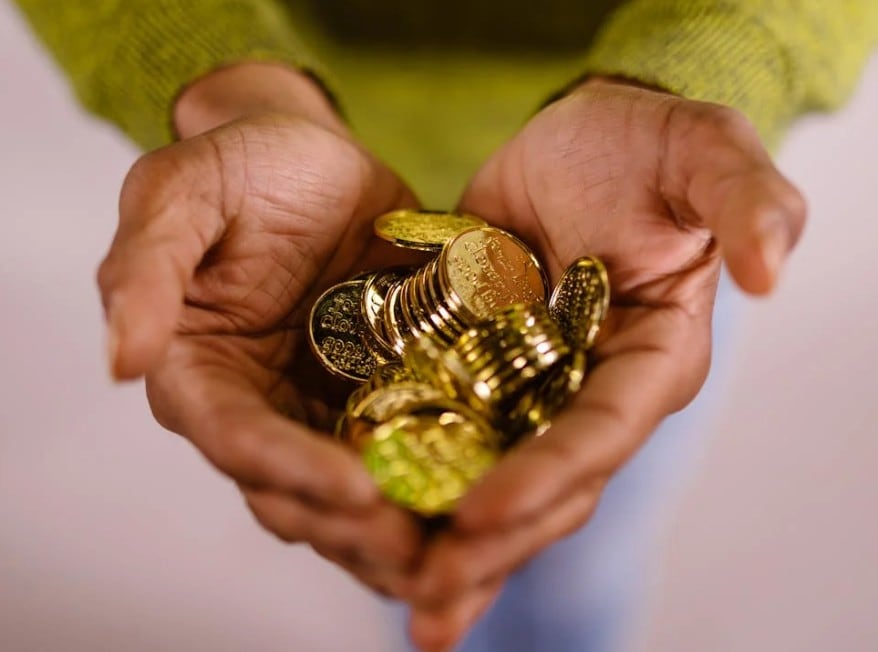
The gold in your safe isn't as "American" as the government wants you to believe. For decades, the US Mint has marketed its investment-grade bullion—the iconic American Eagles and Buffalos—as products of pure domestic grit. Federal law is supposed to ensure this. The Gold Bullion Coin Act of 1985 explicitly mandates that the Mint use gold "mined from natural deposits in the United States."
But a massive investigation by The New York Times just blew that narrative apart. It turns out the "American" gold in our national coins is often just laundered metal from the blood-soaked mines of Colombia. We're talking about gold pulled from the ground by miners working under the thumb of the Clan del Golfo, a brutal drug cartel that’s found a far more stable revenue stream than cocaine.
This isn't just a minor paperwork error. It’s a systemic failure of oversight that has allowed criminal organizations to infiltrate the very heart of the US financial system.
The Cartel Cash Cow
If you think drug trafficking is the primary focus of Latin American cartels, you’re living in the past. In Colombia, illegal gold mining now rivals—and often exceeds—the profitability of the drug trade. It's easy to see why. Gold is a "neutral" asset. It doesn't smell. It doesn't rot. Once you melt it down, its origin vanishes.
The process is grim. In regions like Antioquia, the Clan del Golfo controls the landscape. They don't necessarily dig the holes themselves; they just tax the people who do. Local miners mix mud and gold flecks with mercury, stirring the slurry by hand. This mercury eventually poisons the local water supply and the miners' nervous systems. The resulting "sponge" gold is sold to storefronts in towns like Caucasia—shops that are, surprise, also controlled by the cartel.
From there, the gold is melted, stamped with legitimate-looking paperwork, and exported. Much of it heads straight to the United States. In 2024 alone, about $1.5 billion of Colombia’s gold exports landed in the US.
How Dirty Gold Hits the US Mint
You'd think the US Mint would have a "no cartels allowed" policy. On paper, they do. In practice, they’ve been looking the other way for twenty years.
The Mint doesn't buy gold directly from a guy in a jungle. They buy from massive refiners and middlemen. These suppliers use a "bookkeeping trick" called offsetting. Essentially, a refiner might buy a ton of illegal gold from a cartel-linked source in Colombia, then buy a ton of legal gold from a mine in Nevada. They tell the Mint, "Hey, we have enough American gold to cover your order," even if the physical metal that goes into the coin press came from a dirt pit in the Amazon.
A 2024 federal watchdog report revealed that the Mint hasn't actually enforced the "US-only" requirement for over two decades. They relied on a loose definition that allowed foreign material to qualify as long as the numbers balanced on a spreadsheet.
When confronted, the blame-shifting was immediate:
- The US Mint blamed its suppliers.
- The Suppliers blamed their intermediaries.
- The Intermediaries pointed to the "valid" export paperwork from Colombia.
It’s a circle of denial that ends with you holding a coin that might have funded a massacre in a Colombian mining town.
The Compliance Myth
This is a massive wake-up call for anyone who trusts "Responsible Sourcing" labels. The industry relies on groups like the London Bullion Market Association (LBMA) to certify that gold is clean. But these audits are often paid for by the refineries themselves. They’re "proprietary," meaning the public—and sometimes even the government—doesn't get to see the raw data.
There's a huge discrepancy in the numbers that should make every investor nervous. The LBMA claims about 53% of its gold comes from "recycled" sources (like old jewelry). Yet, the World Gold Council says only about 30% of the world's gold supply is actually recycled. Where does that extra 23% come from? It’s almost certainly "newly mined" illegal gold that’s been misdeclared as recycled to bypass environmental and human rights checks.
What’s Changing Now
Treasury Secretary Scott Bessent has finally ordered a review of the Mint's procurement practices. This is a start, but it’s a late one. The Treasury is now promising tighter sourcing standards, but the damage to the Mint's reputation as a "pure" domestic source is already done.
If you’re an investor, you need to understand that "government-backed" doesn't always mean "ethically sourced." The US Mint is the last link in a chain that launders foreign gold for an insatiable market.
What You Should Do
If you're worried about the ethics of your portfolio, don't just take a certificate at face value.
- Demand Transparency: If you buy bullion, ask your dealer for the specific refinery's audit history.
- Watch the Legislation: Keep an eye on the United States Legal Gold and Mining Partnership Act (S.3496). If passed, it would force more diplomatic resources into cleaning up these supply chains.
- Don't Overpay for the Story: If you were paying a premium for American Eagles because you thought they were "conflict-free" and 100% domestic, you might want to reconsider your strategy. Until the Mint proves it has cleaned up its act, that premium is based on a lie.
The reality is that as long as gold prices stay near record highs, the incentive to cheat is too great. The cartels aren't going anywhere, and until the US Mint starts treating its supply chain like a national security priority rather than a bookkeeping chore, dirty gold will keep finding its way into the vault. It’s time to stop pretending our "sovereign" coins are as clean as the polish on their surface.