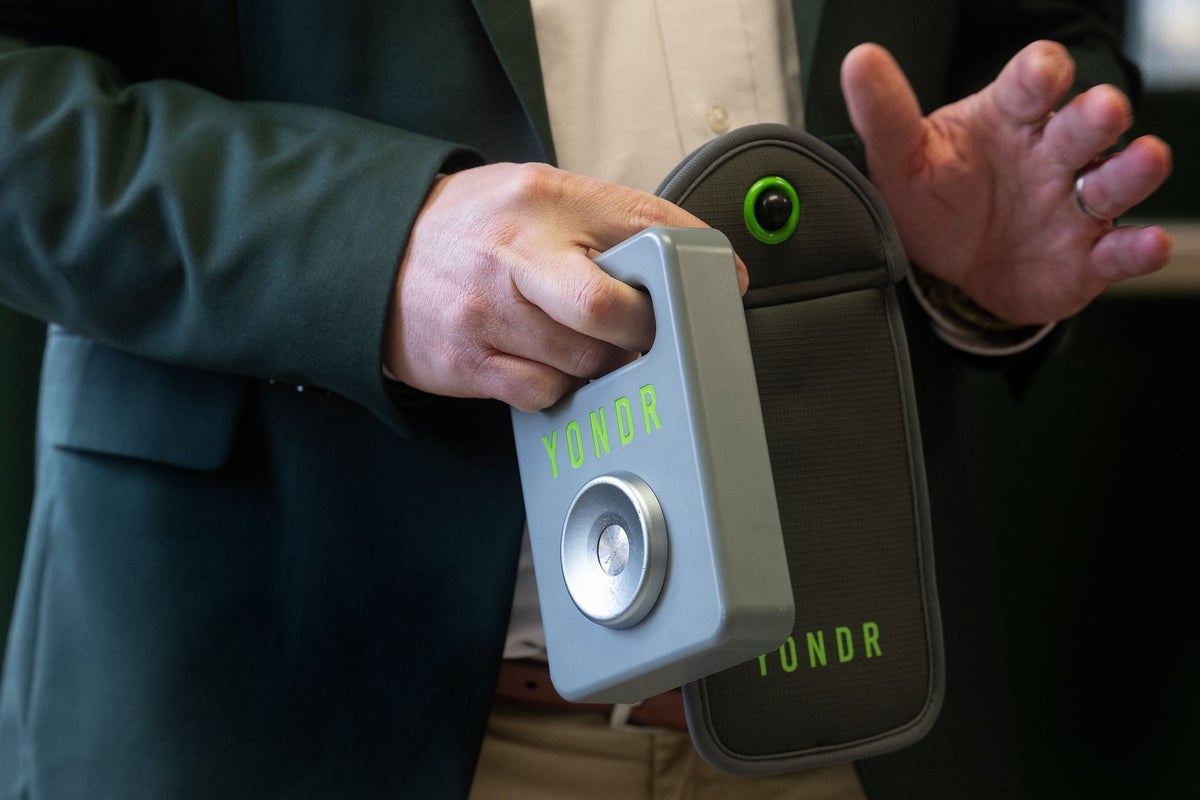
You walk into the office and drop your smartphone into a magnetic pouch or a numbered locker. It feels like high school. But this isn't a classroom in 2014—it's a manufacturing floor, a hospital, or even a high-end law firm in 2026. Phone bans are spreading across the US workplace at a rate we haven't seen in decades. Employers are tired of the digital twitch. They’re done watching productivity bleed out through TikTok scrolls and "quick" text replies that turn into twenty-minute rabbit holes.
The shift is jarring. For years, we heard about the "bring your own device" revolution. Work and life merged. Now, the pendulum is swinging back with a vengeance. Companies are drawing a hard line in the sand. They're betting that a disconnected worker is a more profitable one. They might be right, but the cost to office morale is a different story.
The death of the distracted worker
Let’s look at the numbers. They aren't pretty. Various industry reports and workplace studies suggest the average employee checks their phone dozens of times a day. Some estimates put the time lost to non-work digital activity at over two hours per shift. That's a massive chunk of the work week spent staring at memes or checking sports scores.
In environments like construction or heavy manufacturing, the stakes go beyond just lost money. They’re about life and limb. A distracted forklift driver is a lethal threat. In these sectors, phone bans have been standard for a while, but the enforcement is getting much tighter. Companies like FedEx and various automotive plants have doubled down on "no-device" zones. They’re using technology to fight technology, installing signal-blocking tech or physical locking systems at the entrance of the facility.
It’s not just about safety anymore. It’s about the mental load. When you’re constantly switching between a spreadsheet and a group chat, your brain pays a "switching cost." It takes several minutes to get back into a deep flow state. By banning phones, managers are trying to force employees into a state of deep work. They want your full brain, not the 60% that’s left over after you check your notifications.
Why the ban is moving to the front office
White-collar environments used to be the safe haven for phone users. You were trusted to manage your time. That trust is evaporating. Law firms and financial institutions are starting to implement "phone-free meetings." They’ve realized that if five people are in a room and three are glancing at their laps under the table, the meeting is a waste of expensive billable hours.
There’s also the security angle. We live in an era of massive data breaches and corporate espionage. A smartphone is a high-definition camera and a microphone that lives in your pocket. For companies handling sensitive intellectual property or private client data, a phone is a walking security risk. It’s too easy to snap a photo of a screen or record a confidential conversation. Removing the device removes the temptation and the vulnerability.
The backlash from the workforce
Employees aren't taking this lying down. If you’ve spent the last decade using your phone to coordinate childcare, manage family emergencies, or just stay sane during a dull shift, a ban feels like a demotion. It feels like you’re being treated like a child.
The biggest pushback comes from parents. In a country with a crumbling childcare infrastructure, being reachable is a necessity, not a luxury. If a school calls because a kid has a fever, a parent can't wait until their lunch break to find out. This is where the rigid bans often fail. Smart companies are finding middle ground—dedicated lockers that allow emergency alerts through or providing company-monitored lines for family emergencies.
If you treat people like they’re untrustworthy, they’ll act that way. Strict bans can lead to "phone smuggling." People hide devices in bathrooms or or use secondary burner phones. It creates a cat-and-mouse game that erodes the culture. Managers end up spending more time playing "phone police" than actually managing their teams.
The legal and ethical grey zones
Can an employer legally take your phone? Generally, yes. In the US, private employers have broad leeway to set workplace rules. Unless you have a specific contract or a union agreement that says otherwise, they can tell you to leave the device at the door.
However, there are ADA (Americans with Disabilities Act) considerations. Some people use their phones to monitor medical conditions—think glucose monitors for diabetics or apps for neurodivergent workers who need specific prompts to stay on task. A blanket ban that doesn't account for these needs is a legal landmine. Companies that jump into a ban without a clear exceptions policy are asking for a lawsuit.
Then there's the National Labor Relations Board (NLRB). They’ve historically protected the rights of workers to communicate with each other about working conditions. If a ban is so restrictive that it prevents workers from organizing or discussing pay, it might cross a line. It’s a messy area of law that's currently being tested in real-time as these policies roll out.
Managing the transition without losing your team
If you're a leader thinking about pulling the plug on devices, don't just send an email on Friday afternoon and expect it to work on Monday. That's a recipe for a mass exodus.
You have to explain the "why." If it’s about safety, show the data. If it’s about productivity, be honest about the goals. Provide alternatives. If people can't use their phones for music, maybe the office needs a better sound system or a way for people to play music through their computers.
Create "tech-friendly" zones. Allow people to check their phones in the breakroom or during designated times. This acknowledges that they’re adults with lives outside of work. The goal should be to reduce distraction, not to cut people off from the modern world entirely.
Moving toward a phone-light culture
We're likely to see a "goldilocks" approach emerge. Total bans are too harsh for most office jobs, but total freedom is clearly failing the productivity test. Expect more companies to adopt "phone-away" hours rather than total bans.
Maybe the morning is for deep work—no phones allowed until noon. This creates a predictable rhythm. It gives people the focus they need without the anxiety of being disconnected for eight hours straight.
Check your local labor laws before making any moves. If you're an employee, start looking at your screen time now. If your company hasn't banned phones yet, they're probably watching to see if they need to. Being the person who can stay off their device voluntarily is the best way to ensure the rules don't get forced on everyone.
If you want to implement this successfully, start with a pilot program. Pick one department. Run it for thirty days. Gather feedback. Adjust the rules based on what actually happens, not what you fear will happen. Focus on the output, not just the optics of people staring at screens. If the work is getting done at a high level, maybe the phone isn't the problem. If it isn't, the device is the first thing that has to go. Regardless of how you feel about it, the era of the "always-on" workplace is hitting a physical wall. The locker is waiting.