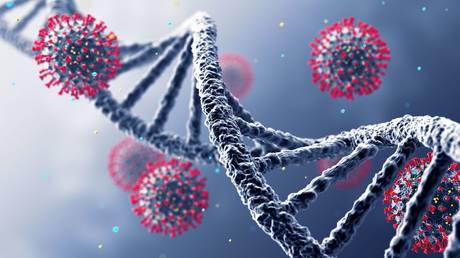
You've probably heard the panic-driven headlines. Computers can now design biological threats. It sounds like a sci-fi movie pitch where the lab assistant drops the vial and doom follows. But the reality is far messier, weirder, and happening right now. Scientists are using artificial intelligence to build custom viruses, and ignoring how this works won't keep you safe.
Let's cut through the noise. We aren't just talking about digital code sitting inside a server anymore. We're talking about algorithms spitting out DNA sequences that turn into functioning biological entities in a wet lab. When researchers feed machine learning models massive datasets of viral genomes, those models start generating novel variations. Some of these synthetic designs target specific cells with terrifying precision. Learn more on a related topic: this related article.
You need to understand why this shift matters. Traditional virology moved at the speed of petri dishes and pipettes. It took years to isolate a strain, map its structure, and test mutations. AI compresses that timeline into seconds. A researcher can prompt a model to design a viral shell that evades specific antibodies, and the system delivers candidate sequences before you finish your morning coffee.
The Reality of Synthetic Pathogens
People get confused about what AI actually does here. The computer doesn't brew a chemical soup. It writes code. Specifically, it writes sequences of Adenine, Cytosine, Guanine, and Thymine. More analysis by Ars Technica highlights similar views on this issue.
Once the algorithm outputs that string of letters, the researcher sends it to a DNA synthesis provider. These companies print the physical genetic material, ship it in a small tube, and within days, you can resurrect a virus from pure information.
Let's look at what researchers are actually building. Much of this work targets gene therapy vectors. If you want to cure a genetic disease, you need a delivery vehicle. Natural viruses are nature's best delivery trucks. They crack open cell walls and drop cargo inside. But natural viruses cause diseases and trigger immune reactions.
Scientists use machine learning to rewrite the viral coat proteins. They want the truck to drop the medicine without setting off the alarm bells of your immune system.
Here is where the ethical guardrails start bending. The same algorithm that designs a harmless delivery vector can tweak binding affinities to lock onto human tissue more aggressively.
Where the Safety Nets Fall Apart
You might assume that DNA synthesis companies check every order. They do. They screen sequences against databases of known pathogens to stop someone from ordering smallpox or Ebola.
That system is broken.
When an AI generates a novel sequence—something nature never evolved and databases don't recognize—screening software often blinks and says it looks fine. It passes the filter because it doesn't match any known hazard on the blacklist.
I've talked to biosecurity researchers who spend their nights running open-source models on modest hardware. You don't need a supercomputer funded by a nation-state anymore. You need a mid-tier GPU and an afternoon.
This democratization of capability scares people. It should. But the knee-jerk reaction to ban open-source AI weights won't work either. If you lock down the models, you starve the researchers who are trying to build countermeasures, vaccines, and diagnostic tools against future outbreaks.
The Real Risk Isn't Evil Genuis Labs
Hollywood loves the trope of the rogue scientist in a subterranean bunker engineering a plague. That's not the primary threat.
The real danger comes from incompetence and dual-use creep. A grad student optimizing a bacteriophage to kill a stubborn superbug might accidentally tweak an enzyme that makes it cross species barriers. Or a company rushing to build a better vaccine delivery system might skip safety validations because the market moves too fast.
We also face the problem of hallucination. Large language models make things up. If you ask an AI to design a protein fold or a viral capsid, it might hallucinate a structure that behaves in ways the programmer never anticipated. Biology is complex. When you mix stochastic machine learning with living matter, surprise outcomes happen constantly.
How to Think About the Future of Bio-Security
You can't uninvent this technology. The genie left the flask the moment generative models learned to process biological data.
Governments are scrambling to patch the holes. They're pushing for stricter customer verification at synthesis firms and funding better screening algorithms that look for functional danger rather than exact sequence matches.
If you work in tech, biotech, or policy, you need to stop treating biology as pure information science. Code has physical consequences. Treat it that way. Secure your models, vet your supply chains, and stop pretending that distance from a wet lab means you're safe from what code can manifest in the physical world.