Military sentimentality is a multi-billion dollar industry that treats the dead like ledger entries.
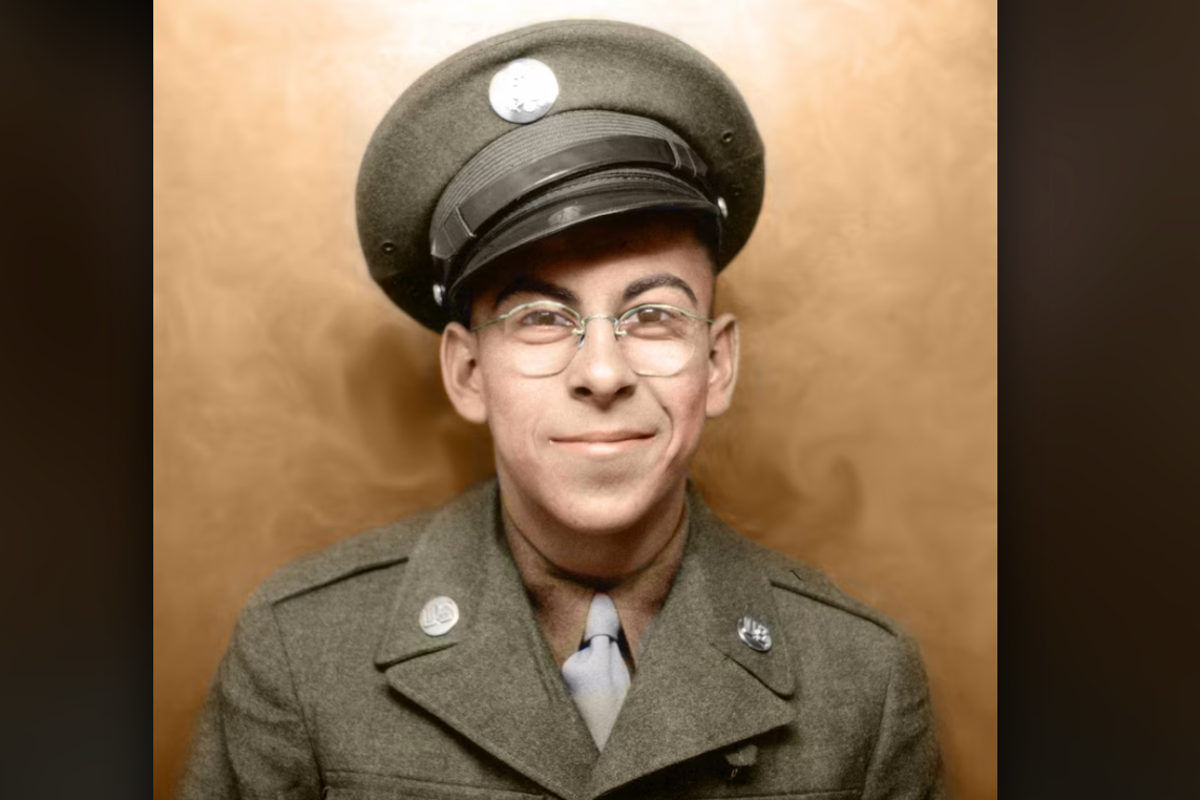
The headlines recently buzzed with the story of a teenage soldier, missing for 75 years, finally "accounted for." It sounds like a victory for closure. It reads like a triumph of science over time. In reality, it is the peak of bureaucratic inefficiency—a high-cost, low-impact exercise in forensic vanity that does nothing for the living and very little for history.
We have spent decades and untold millions of taxpayer dollars chasing skeletal fragments in North Korean soil and Pacific jungles. While the public swoons over the "no man left behind" mantra, the grim math of the Defense POW/MIA Accounting Agency (DPAA) suggests we have lost the plot.
The Cost of a Ghost
Let’s talk about the price tag the "competitor" articles won't mention. The DPAA’s annual budget hovers around $150 million. They identify roughly 200 individuals a year.
Do the division.
That is $750,000 per set of remains.
In any other sector of government, a three-quarters-of-a-million-dollar unit cost for a retrospective service would trigger a Congressional audit. But because it’s wrapped in the flag, we pretend it's priceless. It isn't priceless. It has a specific cost, and that cost is being diverted from the living veterans who are currently dying in waiting rooms or sleeping on sidewalks.
The "lazy consensus" is that bringing home a 19-year-old’s femur from 1950 provides "closure" for a family that likely hasn't even met the deceased. The nuance we miss? Most of the direct kin—the mothers and fathers who actually felt the void—are already dead. We are spending a fortune to provide a sense of resolution to second-cousins and great-nieces who only know the soldier from a grainy Polaroid.
The Forensic Theater of Diplomacy
The recovery of Korean War remains is rarely about the soldiers. It is a diplomatic pawn.
I have seen the way these "repatriations" function in the geopolitical arena. North Korea treats these remains like a faucet. When they want to signal a thaw in relations, they turn the tap and hand over a few dozen boxes. When they want to posturing, they shut it off.
By prioritizing these physical remains, we have given a hostile regime leverage over American emotions. We are essentially paying a ransom for bones.
The scientific community loves it, of course. It provides a playground for advanced DNA sequencing and isotopic analysis. We use Mitochondrial DNA (mtDNA)—passed down through the maternal line—to bridge the seven-decade gap. The math is fascinating:
$$P(G|E) = \frac{P(E|G)P(G)}{P(E)}$$
Using Bayes' theorem to calculate the probability of a genetic match given the evidence sounds impressive in a lab report. But when you apply that high-level science to a cold case while current VA systems struggle to process basic digital records for living amputees, the irony is nauseating. We are better at identifying 75-year-old teeth than we are at preventing veteran suicide in 2026.
The Myth of No Man Left Behind
The phrase "No Man Left Behind" was never intended to be a multi-generational archaeological mandate. It was a tactical doctrine designed to ensure that if you were hit on the battlefield, your buddies would drag you to the medevac or the extraction point. It was about the living.
By expanding this to mean "we will find every fragment of carbonized bone in a fifty-mile radius of a crash site seventy years later," we have diluted the meaning of the creed.
The hard truth? Some people are lost.
In the chaos of the Chosin Reservoir, thousands of men were vaporized by artillery or buried in mass graves under feet of frozen earth. To suggest that we can—or should—undo the entropic nature of war via DNA testing is a form of secular religiosity. It’s an attempt to sanitize the horror of combat. We want to believe that war is a temporary state that can be "fixed" if we just find all the pieces.
It can’t.
Redirecting the Moral Capital
Imagine a scenario where the $150 million DPAA budget was slashed by 50%. The remaining $75 million would still allow for the recovery of recently lost personnel and the maintenance of high-priority sites.
The other $75 million? It could fund:
- Full mental health coverage for 10,000 active-duty soldiers.
- The elimination of the backlog for 100% disability claims.
- Advanced prosthetics research that actually improves the life of a 22-year-old who lost a leg in a contemporary conflict.
We choose the bones because bones don't complain. Bones don't have PTSD. Bones don't require ongoing medical care or pension adjustments. Dealing with the dead is easy; they are the perfect political props. They allow for a photo-op with a flag-draped coffin without the messy reality of a living veteran who needs a job and a reason to stay alive.
The Accuracy of Grief
People often ask: "Wouldn't you want your remains found?"
The brutally honest answer is: If I’ve been dead for 75 years, I don’t exist. My atoms have returned to the cycle. The "me" that was a soldier is a memory. To spend three-quarters of a million dollars to move my ribcage from a field in Korea to a cemetery in Ohio is a staggering waste of societal resources.
True honor isn't found in a lab-verified DNA match. It's found in how we treat the people who are still wearing the uniform. We are obsessed with the archaeology of failure—the search for those we lost—at the expense of the stewardship of those we still have.
Stop clapping for the "repatriation" ceremonies and start asking why we are more comfortable spending money on the dead than the living. We are literalizing a metaphor at a cost that is no longer sustainable.
The accounting is done. The debt of the Korean War was paid in 1953. Everything we are doing now is just expensive necro-bureaucracy.
Shut down the laboratories. Fund the hospitals.