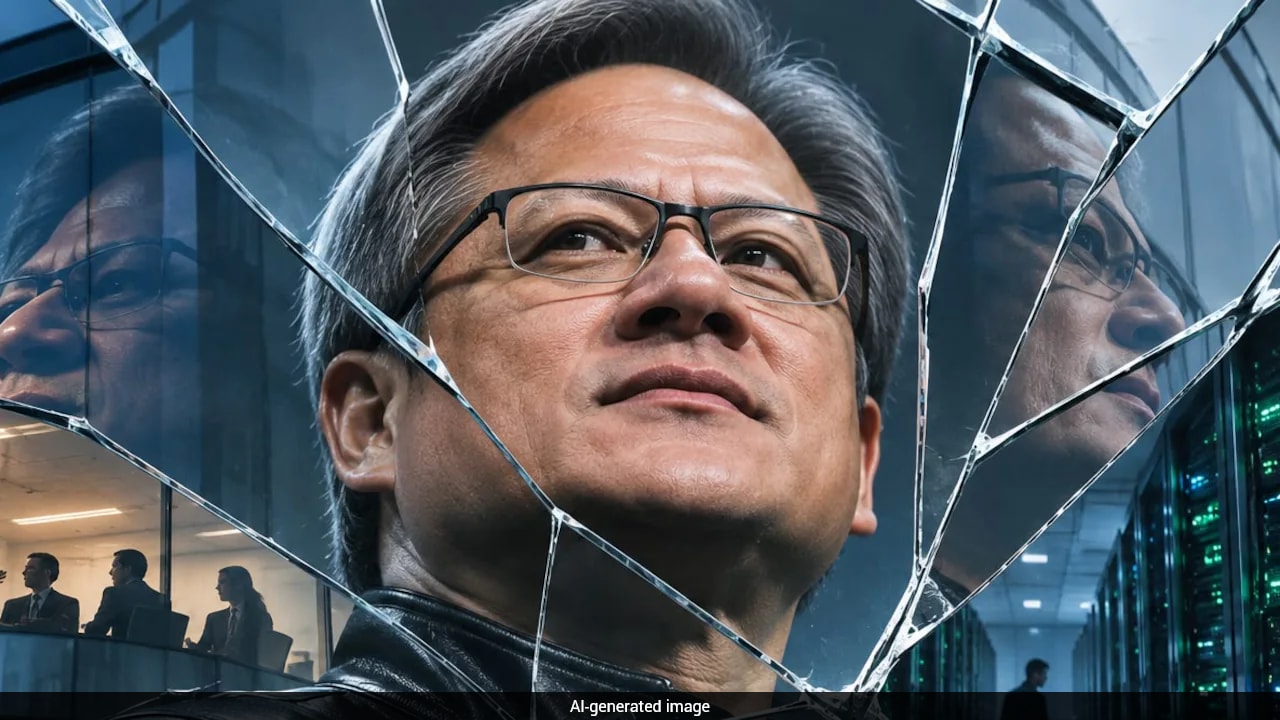
Rumors of a sudden leadership departure at the top of the graphics processing market sent shockwaves through Asian tech circles, instantly putting an estimated $3 billion in Chinese artificial intelligence infrastructure projects under intense scrutiny. While speculative headlines framed the crisis around a single executive resignation, the actual vulnerability runs much deeper than any corner office in Santa Clara. The real threat to China’s multi-billion-dollar AI buildout is not a sudden change in corporate leadership, but a structural reliance on proprietary software ecosystems, brittle grey-market supply chains, and an unverified assumption that domestic silicon can seamlessly replace Western compute architectures overnight.
When capital markets react to unconfirmed leadership shakeups—such as viral speculation surrounding Nvidia CEO Jensen Huang—they rarely price in the technical realities of data center deployment. Instead, they react to perceived political risk. For Chinese cloud providers, state-backed research labs, and frontier model startups, billions of dollars in allocated capital depend on predictable access to high-bandwidth accelerators and the software stacks that make them run. Even a brief disruption in executive continuity triggers immediate compliance freezes, secondary-market price spikes, and frantic re-evaluations of multi-year capital expenditure budgets.
The Anatomy of a $3 Billion Exposure
To understand how $3 billion in capital ends up perched on a razor's edge, you have to look at how modern AI infrastructure is financed and procured in mainland China. Since the tightening of U.S. Department of Commerce export controls in October 2022 and October 2023, Chinese hyperscalers and regional data center operators have been forced into a split-track procurement strategy.
On one track, firms legally purchase downgraded, export-compliant chips—such as the H20—engineered specifically to fall below Washington's compute-density thresholds. On the other track, a sprawling network of intermediaries routes restricted high-end hardware through third-party jurisdictions across Southeast Asia and the Middle East.
Neither track offers long-term stability. A sudden leadership transition at the primary supplier introduces acute uncertainty into both pipelines simultaneously.
- Compliance Lockdowns: Legal departments at major semiconductor suppliers routinely freeze pending export license reviews and custom SKU roadmaps whenever executive leadership changes. An incoming chief executive faces immediate pressure from Washington lawmakers to prove strict adherence to national security mandates, often resulting in the quiet cancellation of "borderline" compliant chips designed for the Chinese market.
- Grey-Market Hoarding: When rumors of executive instability hit Shenzhen’s Huaqiangbei electronics markets or Singaporean brokerage desks, hardware brokers immediately pull inventory off the market. Prices for existing stock jump by 15% to 30% within hours, blowing holes in the capital budgets of mid-sized Chinese AI startups that priced their training runs on yesterday's spot rates.
- Financing Covenants: Regional governments in China frequently back municipal AI computing centers through local government financing vehicles (LGFVs). These debt instruments carry strict deployment deadlines. If hardware delivery slips by even two quarters due to supplier restructuring, projects risk defaulting on local infrastructure milestones.
The $3 billion figure circulating among industry analysts is not a single canceled contract. It is the cumulative value of stalled data center buildouts, stranded real estate shells waiting for server racks, and unallocated venture capital frozen until supply predictability returns.
The Software Moat Nobody Talks About
Hardware headlines always focus on raw teraflops and transistor counts. That is a mistake. The true chokepoint holding Chinese AI projects hostage is CUDA (Compute Unified Device Architecture), the proprietary parallel computing platform that has been refined for nearly two decades.
You can smuggle a pallet of high-end GPUs across a border. You cannot smuggle an entire ecosystem of millions of developers, optimized mathematical libraries, and battle-tested debugging tools.
Consider a hypothetical example to see how this plays out inside a real engineering team. Imagine a Shanghai-based foundation model startup sitting on $200 million in fresh funding and 4,000 high-end accelerators. Half of those chips are Western imports acquired prior to recent export bans; the other half are newly delivered domestic alternatives from a leading local chipmaker. On paper, the domestic chips offer 80% of the raw FP16 compute performance of their Western counterparts. In practice, the engineering team hits a wall. Distributed training across thousands of nodes requires ultra-low-latency interconnects and fault-tolerant software orchestration. When a single node fails during a three-week training run—a daily occurrence at scale—the Western software stack isolates the fault and resumes from a checkpoint within minutes. On the heterogeneous domestic cluster, engineers spend weeks rewriting custom kernels, fighting memory leaks, and watching utilization rates plummet below 45%.
"Silicon is just sand until the compiler makes it sing. Replacing the chip is a manufacturing problem; replacing twenty years of compiler optimization is a generational crisis."
This software gravity explains why Chinese tech giants continued spending billions on export-restricted or nerfed Western chips even when domestic alternatives were available at steep discounts. When an executive shock threatens the roadmap of the dominant vendor, it threatens the foundational assumptions upon which thousands of Chinese machine learning engineers have built their training pipelines.
Why Domestic Alternatives Cannot Absorb the Shock
Whenever Western supply chains wobble, state media and bullish domestic analysts point to homegrown semiconductor champions—Huawei’s Ascend series, Biren Technology, Moore Threads, and Cambricon—as ready-made saviors. The reality inside server rooms is far less triumphant.
Yield Constraints at the Foundry Level
Advanced AI accelerators require leading-edge process nodes—typically 7-nanometer or below—combined with advanced packaging technologies like CoWoS (Chip-on-Wafer-on-Substrate). Because Dutch lithography giant ASML is barred from shipping Extreme Ultraviolet (EUV) machines to China, domestic foundries like SMIC must rely on older Deep Ultraviolet (DUV) equipment using complex multi-patterning techniques.
Multi-patterning works, and it proved capable of producing 7nm chips for consumer smartphones. However, scaling that process to massive, reticle-limit AI server dies results in painfully low wafer yields. When half the dies on a silicon wafer fail quality control, manufacturing costs skyrocket and total monthly output remains capped at a fraction of domestic demand. Huawei has openly prioritized its own internal cloud infrastructure and select state-owned telecom operators for Ascend 910B deliveries, leaving private Chinese AI startups fighting over scraps.
The High-Bandwidth Memory Bottleneck
An AI accelerator without High-Bandwidth Memory (HBM) is like a Formula 1 engine bolted to a bicycle frame. Training large language models is heavily memory-bandwidth bound; the compute cores spend vast amounts of time waiting for model weights to load from memory.
Global HBM production is controlled almost entirely by three companies—SK Hynix, Samsung, and Micron—all of which are bound by U.S. export restrictions regarding advanced memory shipments to China. While Chinese memory maker CXMT is aggressively accelerating its HBM2 and HBM3 development, mass production at competitive yields remains years behind Korean rivals. Even if Chinese designers build a brilliant logic die, they cannot ship it in volume without HBM stacks to feed it.
The Washington Factor and Executive Succession
To understand why a leadership change at a single American company triggers panic in Beijing, you have to look at the unique diplomatic tightrope walked by semiconductor executives. Under Jensen Huang, Nvidia mastered a delicate balancing act. The company publicly complied with every letter of U.S. export law while rapidly engineering compliant alternatives—the A800, H800, and later the H20—to keep a foothold in a market that historically accounted for 20% to 25% of its data center revenue.
That strategy required immense personal political capital in both Washington and Beijing. It demanded an executive willing to absorb criticism from U.S. congressional hawks who accused the company of exploiting regulatory loopholes, while simultaneously reassuring Chinese regulators and customers that they would not be abandoned overnight.
Any successor stepping into that role faces an entirely different incentive structure. A new CEO rarely possesses the founder-level authority required to push back against aggressive regulators in Washington. The safest, lowest-risk move for a newly appointed executive is strict over-compliance—halting custom China-specific chip designs, tightening audit trails on third-party distributors in Asia, and pivoting engineering resources entirely toward Western hyperscalers whose demand already outstrips supply through 2027.
For Chinese buyers, the departure of a founder-CEO represents the loss of their most effective commercial advocate inside the American tech establishment. Without a leader willing to fight for the commercial viability of the Chinese market, the remaining legal supply channels risk drying up completely.
Stranded Capital and the Data Center Hangover
Over the past eighteen months, local governments and private investors across China poured billions into constructing massive AI computing centers in hubs like Guizhou, Inner Mongolia, and the Yangtze River Delta. Many of these facilities were built on a "build it and the chips will come" thesis.
Today, dozens of these facilities are facing an acute asset-liability mismatch.
| Infrastructure Component | Capital Allocation Share | Current Bottleneck Status |
|---|---|---|
| Land, Power & Cooling Shells | 25% – 30% | Overbuilt: Excess capacity sitting idle in Tier 2 and Tier 3 cities. |
| Networking & Optical Transceivers | 10% – 15% | Moderate: Domestic optical suppliers (Innolight, Eoptolink) are globally competitive. |
| AI Compute Accelerators | 50% – 60% | Severe: Delayed deliveries, grey-market markups, and export compliance freezes. |
| Orchestration & MLOps Software | 5% – 10% | Fragmented: High engineering overhead required to port CUDA workloads to local chips. |
When 60% of a project's budget is tied up in accelerators that either cannot be sourced or cannot be clustered efficiently due to software friction, the remaining 40% becomes dead weight. Power purchase agreements signed with local utilities go unused. Liquid-cooling loops sit dry. Investors who expected rapid returns from renting out GPU clusters to domestic app developers find themselves holding depreciating real estate while frontier AI development consolidates around a handful of cash-rich tech giants—ByteDance, Alibaba, Tencent, and Baidu—that stockpiled tens of thousands of chips before the hardest export walls went up.
The Myth of Unstoppable Momentum
For years, the dominant narrative in global tech coverage portrayed China's AI sector as an unstoppable juggernaut capable of innovating around any hardware constraint through sheer engineering grit and algorithmic efficiency. That narrative is half true, and the missing half is proving expensive.
Algorithmic breakthroughs like Mixture-of-Experts (MoE) architectures and aggressive quantization have undeniably allowed Chinese labs—such as DeepSeek and 01.AI—to train remarkably capable models using less compute than their Silicon Valley counterparts. Efficiency, however, only stretches existing hardware; it does not eliminate the need for frontier-scale compute clusters when pushing into multimodal reasoning, video generation, and autonomous agentic systems.
Every time a rumor of executive instability, fresh sanctions, or distributor crackdowns ripples through the market, it exposes the structural fragility beneath China's AI ambitions. Billions of dollars in domestic capital can buy land, pour concrete, and subsidize electricity. It cannot instantly conjure EUV lithography machines, high-yield HBM stacks, or twenty years of compiler maturity out of thin air. Until China's domestic semiconductor supply chain solves its foundry yield and software ecosystem bottlenecks, a single personnel rumor in California will continue to dictate the survival of multi-billion-dollar infrastructure bets across the Pacific.