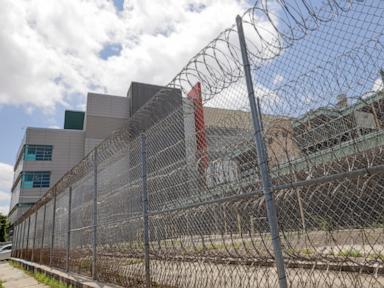
Two and a half years. That is the headline number everyone is staring at after a jail employee helped ten detainees slip out of custody in New Orleans.
Cue the outrage. Cue the hot takes about moral decay, rogue staffers, and how one bad apple tore the system apart.
Lazy consensus loves a single villain. It is tidy. It fits into a push notification. And it lets administrators off the hook for building facilities that fail on their own.
A prison sentence for a staffer who enabled a mass escape is not justice on its own if the underlying physical plant, staffing math, and operational controls made the breach predictable. Treating a brazen ten-inmate breakout purely as a story about one corrupt or compromised worker misses the structural rot sitting right behind the cell doors.
The Lazy Consensus Around Inside Jobs
Whenever a high-profile breakout happens, the public script rarely changes. First comes shock at the sheer nerve of ten people getting out at once. Next comes focus on the insider who opened a door, bypassed a lock, passed information, or looked the other way. Then comes the sentence—in this case, 2.5 years—as if a gavel automatically restores security.
That framing is convenient for people who run institutions. Blaming an individual turns a systemic failure into a personal morality play.
I have watched agencies and operators pour millions into shiny hardware, policy binders, and post-incident PR while ignoring the daily realities of understaffed shifts and aging infrastructure. When an escape happens, pointing at the employee who helped unlock the path feels decisive. Often, it is a smoke screen.
Security professionals use specific terms for a reason. Insider threat refers to someone with authorized access whose actions—intentional or negligent—compromise security. Physical security means the barriers, locks, lighting, surveillance, and architectural layout designed to delay or prevent unauthorized movement. Procedural controls are the rules and verification steps staff are supposed to follow every single time a door moves or a count happens.
When all three fail around a ten-person escape, singling out one worker's 2.5-year sentence tells only part of the story. An insider rarely operates in a vacuum inside a well-run correctional facility. They exploit weak links that were already there: broken latches, blind spots on cameras, rushed headcounts, or exhausted crews working mandatory overtime.
Why People Ask the Wrong Questions After a Jailbreak
After a story like this breaks, search bars fill up with predictable questions. People type things like How could one jail worker let ten inmates escape? or Is a 2.5-year sentence too light for helping inmates break out? or How do jails stop inside jobs?
Every one of those questions starts from a flawed premise if it treats the worker as an anomaly rather than a symptom.
Ask How could one worker let ten people out? and you invite guesses about bribes, coercion, or carelessness. Ask How do you build a facility where one person's bad choice cannot hand freedom to ten detainees? and you start talking about real engineering and supervision.
Consider what happens when a facility relies on single-point human compliance instead of layered barriers. Imagine a scenario where a correctional wing has worn door mechanisms that sometimes stick, cameras that are offline in two hallways, and officers pulling back-to-back shifts because thirty positions sit vacant. If one staff member decides to cooperate with detainees—or gets manipulated into skipping a protocol—the system does not catch the mistake at the next checkpoint. There is no second lock requiring independent verification. There is no alert when a door stays open too long. One person becomes the master key because management built a house of cards.
As for whether 2.5 years is "enough," sentencing in criminal courts weighs statutory ranges, cooperation, culpability, and prosecutorial discretion. Debating the exact number of months makes for loud cable television, yet sentence length alone does not weld a faulty bolt or fix a broken camera feed. Deterrence only works when people believe they will be caught quickly and when the environment makes rule-breaking hard in the first place.
The Anatomy of a Mass Escape
Ten inmates do not casually stroll out of a secure facility by accident. Mass escapes require coordination, timing, and gaps in control.
| Failure Layer | What It Looks Like in Practice | Why Blaming One Worker Misses It |
|---|---|---|
| Physical Plant | Faulty locks, weak walls or ceilings, unmonitored blind spots, outdated access control | Bad hardware gives an insider leverage they would not have in a sound building |
| Staffing & Fatigue | Chronic vacancies, double shifts, stretched supervision ratios | Burnout erodes vigilance across the entire shift, not just one individual |
| Verification & Audits | Rubber-stamped headcounts, unlogged key or door activity, slow alarm response | Missing checks let ten absences snowball before anyone sounds the alarm |
| Culture & Oversight | Lax supervision, normalized shortcuts, weak internal accountability | Shortcuts become routine long before a criminal act takes place |
Look at that table again. A single staffer might pull the lever, press the button, or pass the word. Still, ten people walking out means multiple safeguards did not hold.
What Corrections Experts Actually Point To
In corrections and security management, seasoned practitioners—including leaders associated with organizations like the American Correctional Association and federal oversight bodies such as the National Institute of Justice—have hammered the same core lessons for decades. Security is layered. No single link should carry the whole load.
When facilities fail, the post-mortem almost always finds overlapping defects:
- Aging, deferred maintenance: Jails in older urban footprints frequently battle deteriorating infrastructure while budgets go to crises instead of preventive upkeep.
- Chronic understaffing: When a facility runs short-handed, officers get pulled in ten directions at once, making thorough searches and strict movement control much harder.
- Broken accountability loops: If key control, cell checks, and camera reviews are sloppy on a normal Tuesday, a deliberate breach blends into everyday dysfunction.
None of this excuses a worker who actively helps detainees escape. Breaking public trust inside a secure facility is a serious offense, and criminal penalties exist for a reason.
Still, there is a real downside to pushing a tough structural critique too far. If you focus almost exclusively on flawed buildings, staffing shortages, and broken systems, you risk sounding like you are making excuses for criminal conduct. You can also sound cynical about reform—as if nothing can improve until a city spends hundreds of millions on new concrete and hires hundreds of new guards overnight.
That is a fair criticism. Accountability for individuals matters. If a staff member crosses the line into aiding an escape, prosecutors should pursue it and courts should impose consequences under the law.
The mistake is stopping at the courtroom door. A 2.5-year sentence closes one criminal case. It does not automatically fix a troubled facility.
Actionable Moves for Anyone Fixing Broken Facilities
If you actually want fewer ten-inmate breakouts instead of another round of outrage after the next one, stop treating every escape as a pure whodunit about a rogue employee. Do this instead:
- Audit single-point failures first. Map every movement path from housing unit to exterior perimeter. Wherever one person's action or inaction can open two or more barriers without an independent check, redesign the workflow or hardware.
- Treat headcounts and key control like life-or-death math. Require strict, verifiable counts and tight control over keys, fobs, and overrides—with immediate escalation when numbers or logs do not match.
- Fix maintenance and staffing bottlenecks before a crisis hits. Track broken locks, blind spots, and overtime spikes as early-warning security indicators, not routine administrative headaches.
- Separate individual prosecution from institutional reform. Let the courts handle the employee's criminal case while leadership conducts a cold-eyed operational review of how ten people got out.
Stop acting shocked when a fragile system snaps just because one person helped pull it down.