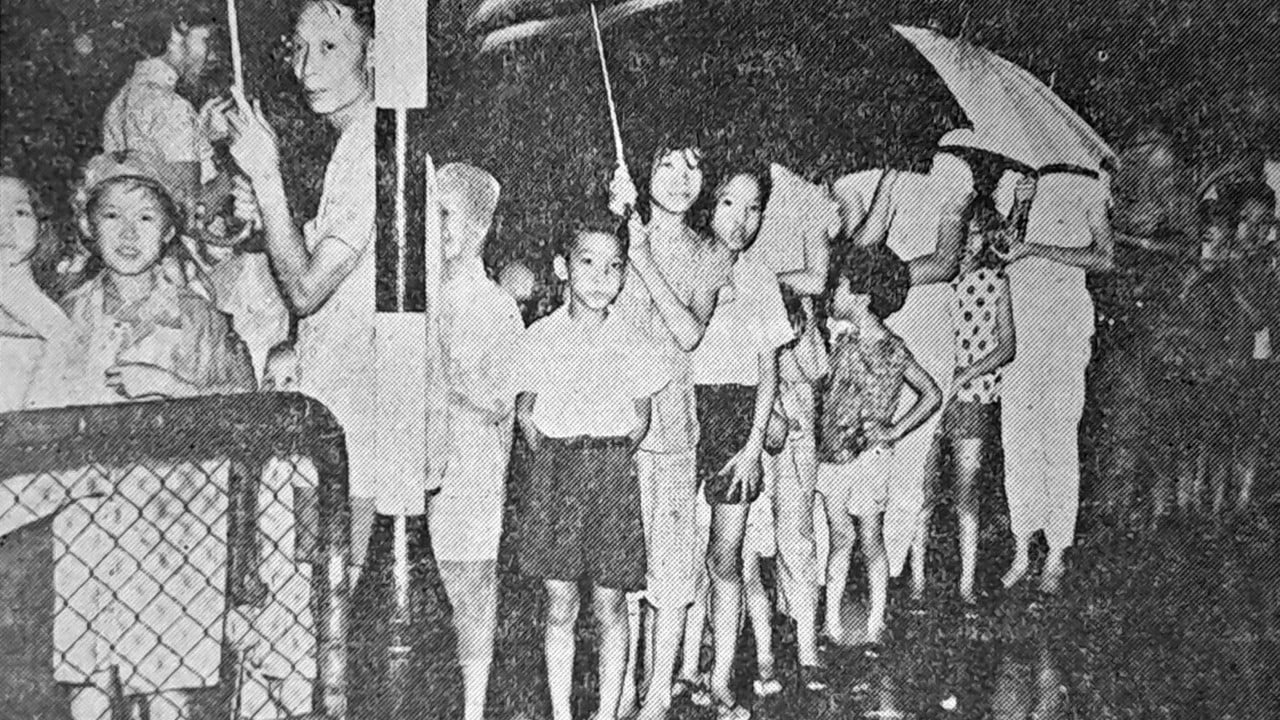
In August 1961, the humid streets of Hong Kong transformed into a claustrophobic cage. A silent, swift predator arrived, carried through the city’s water pipes and food stalls. Cholera, the "No. 2 disease" that had been carving a path of destruction across the south-west Pacific, finally breached the border. It did not merely cause a medical emergency; it shredded the thin veneer of stability in a territory already buckling under the weight of a massive refugee influx and crumbling infrastructure.
The authorities were not just battling a bacterium. They were fighting the consequences of decades of neglect, rapid urbanization, and a fractured social order.
A City Built for Collapse
Hong Kong in the early 1960s was a pressure cooker. Following World War II, a relentless surge of refugees from the mainland forced thousands into unplanned, sprawling squatter settlements. In these densely packed pockets, sanitation was not merely insufficient—it was nonexistent.
Water was the lifeblood of the city, yet it was also its greatest vulnerability. Chronic shortages forced residents to rely on whatever supply was available, including polluted wells and clandestine, makeshift piping systems. When the Vibrio cholerae El Tor strain infiltrated these shared sources, the infection spread with terrifying efficiency. Every street food vendor, every shared water tap, and every crowded tenement became a potential vector.
The government’s previous failure to enforce ordinances regarding sewage and food preparation meant that when the first case appeared, the city possessed no buffer. The virus thrived on the chaotic mobility of a population desperate to survive.
The Myth of Containment
When the panic began, the colonial administration pivoted to an emergency-style posture. They launched a massive inoculation campaign, unloading vaccines from aircraft and rushing them to centers across the territory. Officials boasted that two-thirds of the three-million-strong population received shots within weeks, aiming for total coverage.
Yet, numbers rarely tell the full story. While the vaccine provided a tangible action for the public, it masked deeper, more uncomfortable realities. The transmission of this specific strain of cholera had little to do with traditional water-borne models; it was effectively sustained by asymptomatic carriers. Even as the government claimed control, the bacteria persisted, recurring in 1962 and 1963. The virus had moved beyond simple case-to-case transmission, turning the entire population into a sprawling, invisible host network.
The authorities were essentially playing a game of catch-up against an enemy that lived inside their own infrastructure.
Social Surveillance as Medicine
The long-term legacy of 1961 was not just in improved municipal plumbing or the shuttering of illegal hawkers—though these did eventually occur. The real impact was the hardening of the state.
Much like the shifts occurring across the border in China, where the pandemic became a catalyst for total social restructuring and disciplinary control, Hong Kong saw a significant tightening of administrative oversight. The outbreak forced the colonial government to map its citizens more accurately. Health education programs became a vehicle for monitoring behavior, and the supervision of food premises provided a pretext for asserting authority over previously autonomous spaces.
What started as a biological threat ended as a bureaucratic necessity. The government realized that to keep a population of this size alive, they had to manage the minutiae of their daily lives, from what they ate to how they gathered.
The Echoes of Emergency
The 1961 disaster was a harsh teacher. It revealed that in a city built on the fringes of stability, hygiene is never just a personal choice; it is a prerequisite for collective survival. The shift in dietary habits and the eventual modernization of sanitation systems were not born out of foresight, but out of the sheer, exhausting pressure of a repeating nightmare.
Modern observers often look back at these events with a clinical, detached curiosity. They see a singular, contained event. But for those living in those squatter huts or drinking from those infected wells, it was a reminder that the city was always only one missed pipe repair or one unmonitored vendor away from total paralysis.
We like to think our current systems are proofed against such crises. History suggests that we are usually only as secure as the weakest link in our shared infrastructure. When that breaks, the veneer falls away, leaving us to confront the reality of our own fragility.
Hong Kong’s 1961 Cholera Battle
This archival footage provides a firsthand look at the scale of the emergency and the intense public health measures taken during the 1961 outbreak.
http://googleusercontent.com/youtube_content/1